Single Coat
Light residential — clean garages, basements, utility rooms.
Top Coat
Pigmented urethane, scuff and chemical resistant.
Base Coat
Two-part epoxy that bonds to the slab.
Vapor Barrier
Stops moisture from rising up through the slab.
Epoxy Coatings
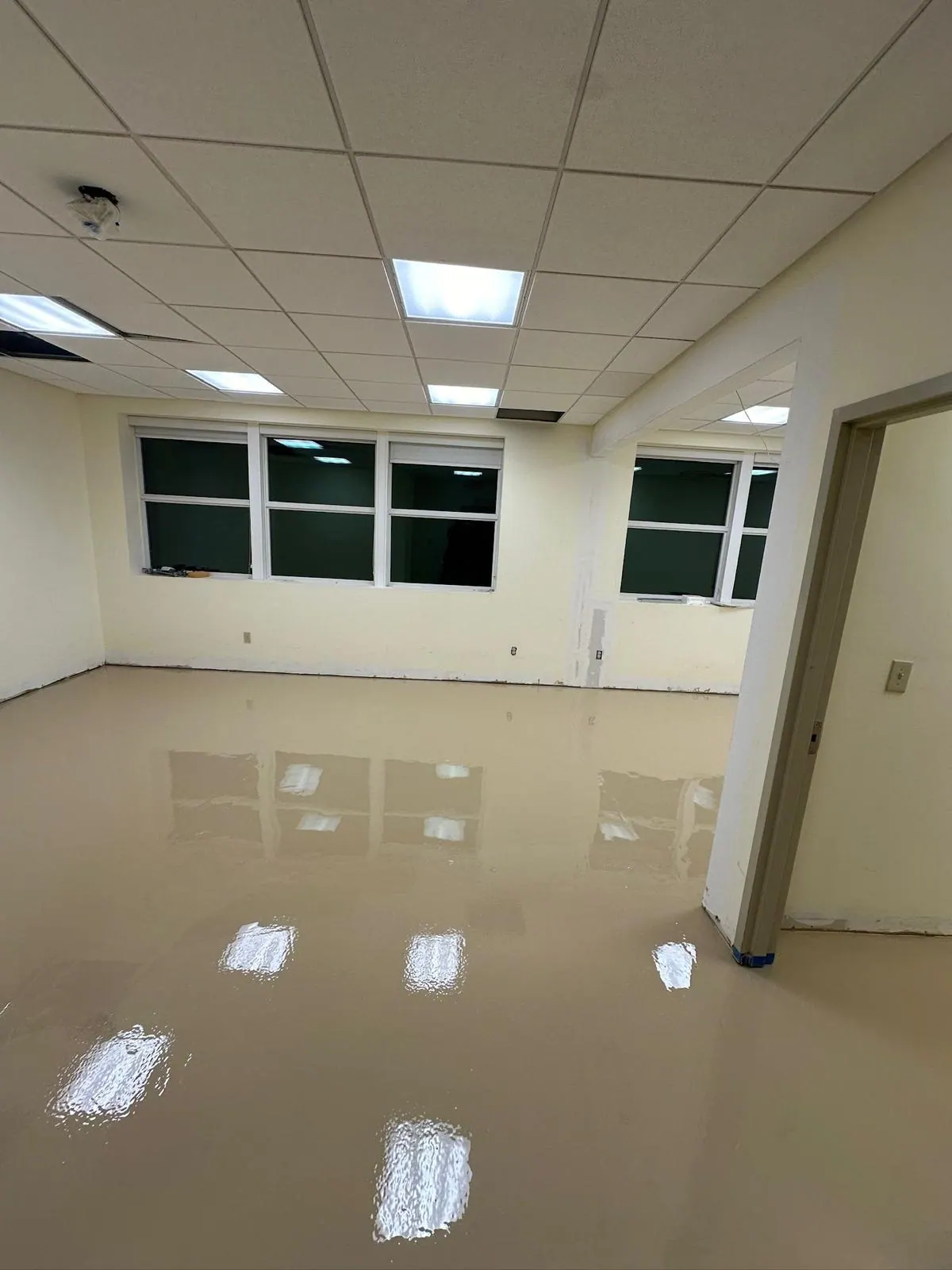
Epoxy turns bare concrete into a surface that resists oil, salt, and heavy traffic — and cleans with a mop instead of a pressure washer.
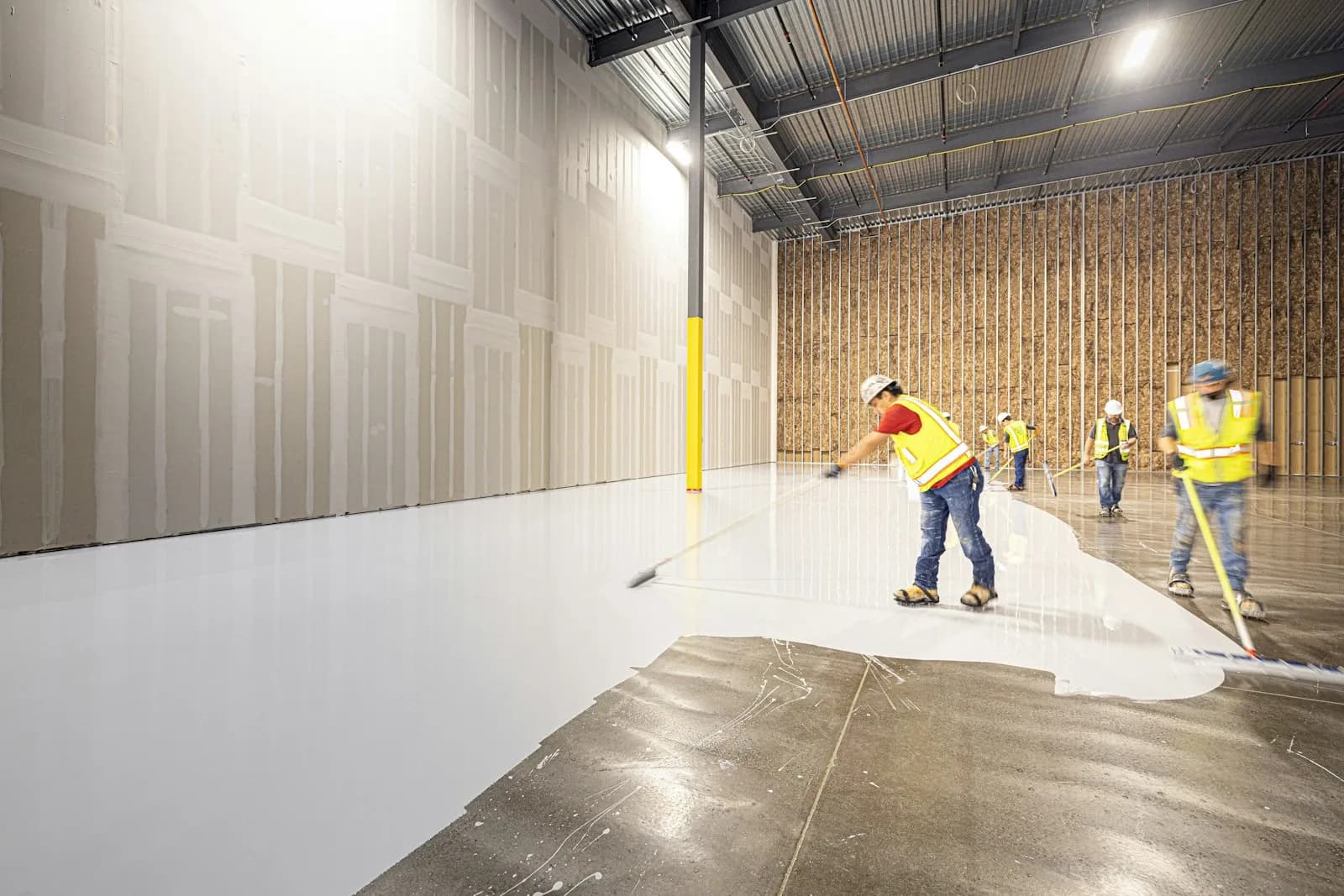
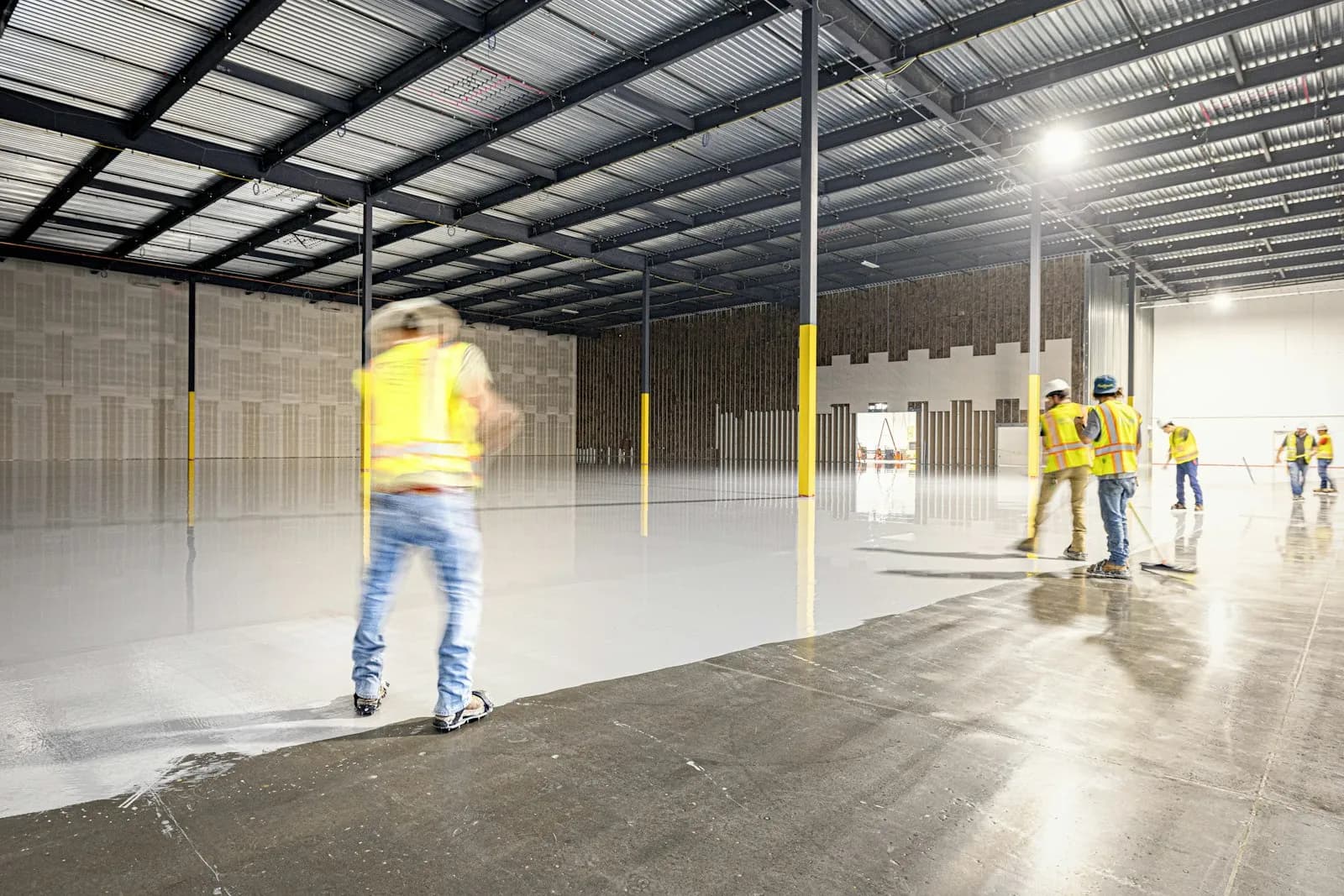
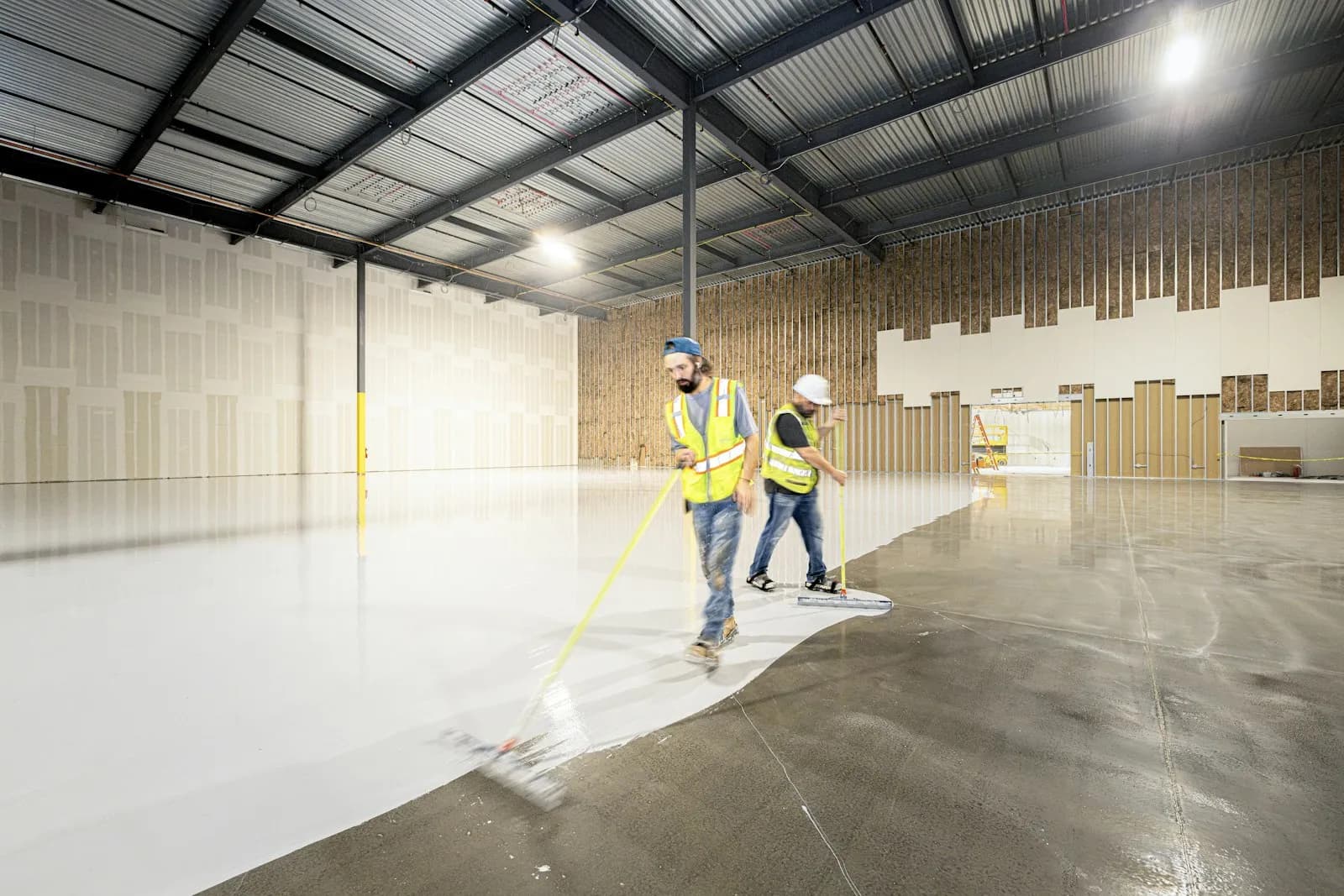
We install flake, metallic, and solid-color epoxy systems for garages, basements, workshops, and small commercial spaces. What makes a coating last is what happens before the epoxy: diamond grinding the slab to open the pores, testing for moisture vapor, and filling cracks and pits so they don't telegraph through the finish. A coating rolled onto an unprepped slab peels within a season — that's the failure mode behind every DIY garage kit that lifted with the tires.
Connecticut garages take road salt for five months a year. A properly bonded epoxy floor with a polyaspartic topcoat shrugs that off, stays bright under a single shop light, and doesn't stain where the car parks.
A standard two-car garage runs 2 to 3 days: grind and repair on day one, base and flake broadcast on day two, topcoat on day three. Light foot traffic after 24 hours, vehicles after 72.
Built in layers
We build every epoxy floor as a system, not a single coat. Each layer plays a role — sealing the slab, locking moisture out, taking the abuse, looking sharp. Pick the system that fits the room, the traffic, and the look you want.
Light residential — clean garages, basements, utility rooms.
Top Coat
Pigmented urethane, scuff and chemical resistant.
Base Coat
Two-part epoxy that bonds to the slab.
Vapor Barrier
Stops moisture from rising up through the slab.
Moderate commercial — workshops, retail back-of-house, light warehouses.
Top Coat
High-build urethane finish, mar and chemical resistant.
Body Coat
Pigmented epoxy build-coat for thickness and uniformity.
Base Coat
Penetrating primer that locks to the slab.
Vapor Barrier
Stops moisture from rising up through the slab.
Heavy industrial — non-slip warehouses, food prep, mechanic shops.
Top Coat
Clear urethane sealer, locks the aggregate in.
Body Coat
Pigmented build-coat that anchors the quartz.
Silica Quartz
Broadcast aggregate gives the floor its grip and depth.
Base Coat
Two-part epoxy primer.
Vapor Barrier
Stops moisture from rising up through the slab.
Premium garage — designer color flakes, glossy showroom finish.
Top Coat
Clear high-gloss urethane, brings out the flake color.
Flake Broadcast
Polymer color chips you pick from the swatch.
Body Coat
Pigmented epoxy that grips the flake.
Base Coat
Primer that bonds to the slab.
Vapor Barrier
Stops moisture from rising up through the slab.
Built for any space
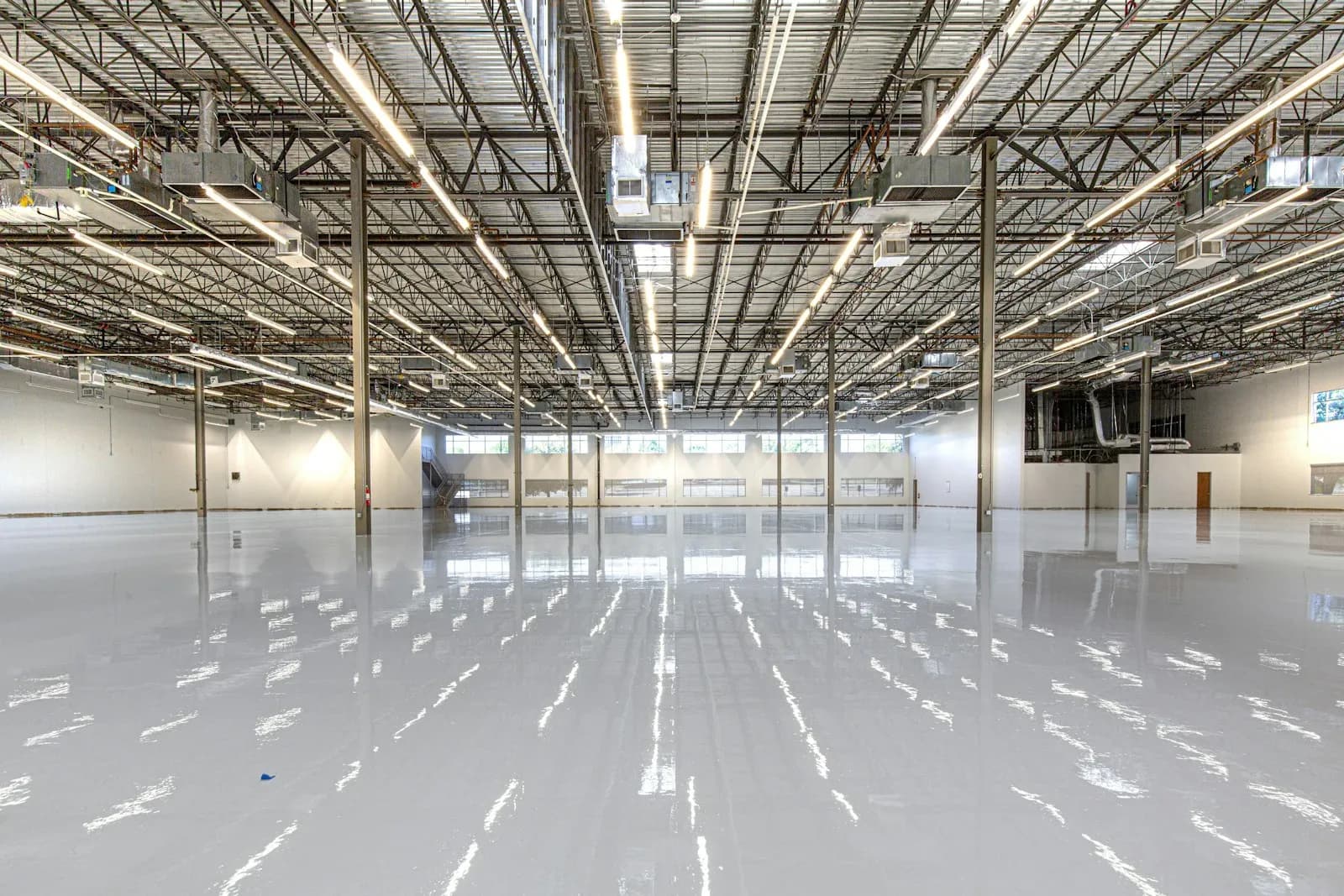
Whether it's a 50,000 sq ft warehouse or a high-end dealership floor your customers stand on, the same crew and the same materials engineer the surface from the slab up.
Industrial warehouses live and die by floor toughness. Forklifts, pallet jacks, dropped tools, oil spills, daily sweeping — your floor takes a beating. Our epoxy systems shrug it off and clean up with a mop. Same surface, year after year.
Advantages
Case studies
Based in Shelton, CT and working across Fairfield and New Haven County. Free in-home estimates, no pressure.
Hardwood flooring experts
Installation, refinishing, and repair across Connecticut. Get a free in-home estimate today.